Friday, March 31, 2023

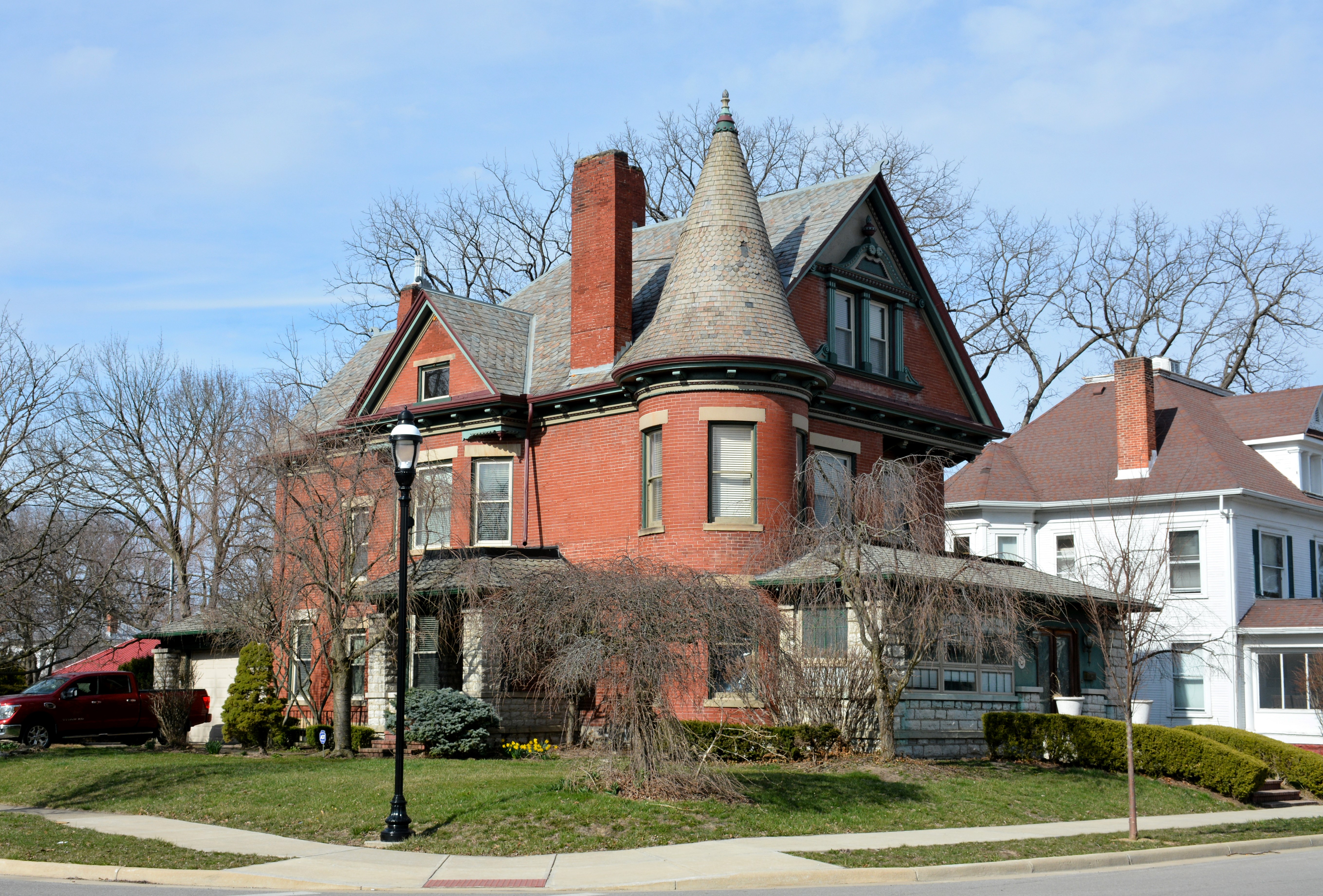
Donovan Robeson House - Greenville, Ohio


The Donovan Robeson House is a historic house in Greenville, Ohio. It was built in 1902. Dr. Donovan Robeson was a physician, surgeon, and probate judge. A graduate of Ohio Medical College in 1870, he practiced medicine in Illinois, then Arcanum, Ohio. He did postgraduate study at Bellvue Medical College in 1874. Dr. Robeson moved to Greenville at the turn of the century and had his new home built with his office in the basement. From 1902 until 1908, the doctor served as Darke County Probate Judge. Architectural Style-Queen Anne. Posted to the National Register of Historic Places on December 12, 1976. GPS: +40.09861°N, -84.63517°W.
 

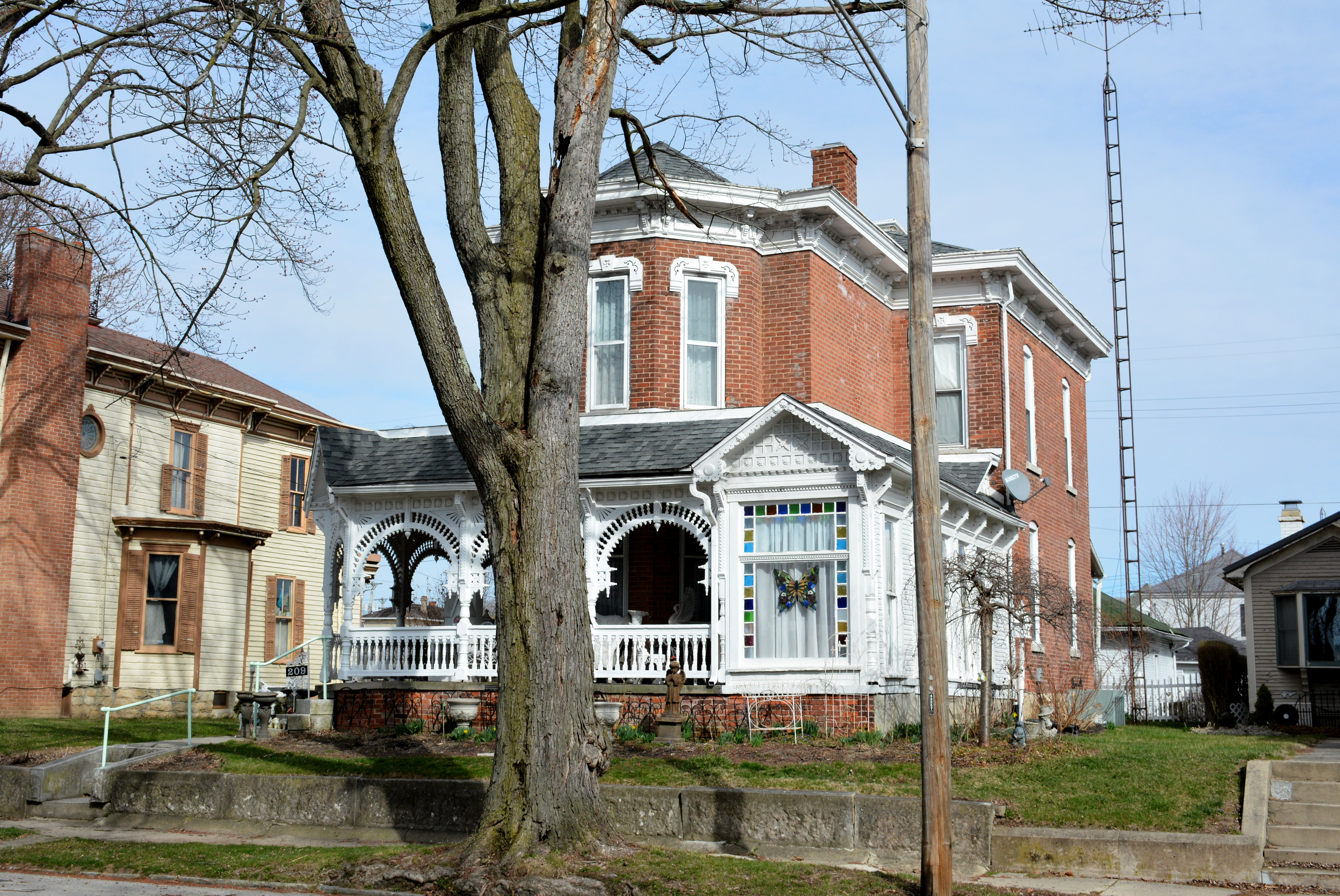
Leftwich House - Greenville, Ohio


 The Leftwich House is a historic house in Greenville, Ohio, built in 1875. The significance of this house is entirely architectural and is one of the few remaining, unaltered examples of the Eastlake style. Posted to the National Register of Historic Places on October 21, 1975. GPS: 40.09846°N, -84.62987°W.

Benjamin Franklin Coppess House - Greenville, Ohio


The Benjamin Franklin Coppess House in Greenville, Ohio. Benjamin Coppess, was a successfull farmer, owning 300 acres, and local government official in Darke County and the grandson of  one of the county's earliest pioneers, Adam Coppess, who came to Darke County in 1819.  Benjamin was born in Richland Township on April 25, 1838 and died in Greenville on November 17, 1911. Benjamin and Maria Coppess were married forty-nine years. Mrs. Coppess died in 1913.The Coppesses moved to Greenville and had the house built in 1882. One of the reasons the house is historically significant, besides the architectural aspect, is because of a bathroom — it is believed to have been the first Greenville building with a flush toilet. Architectural Style-Queen Anne and Stick-Eastlake style. Posted to the National Register of Historic Places on March 10, 1978. GPS: 40.09829°N, -84.62991°W.

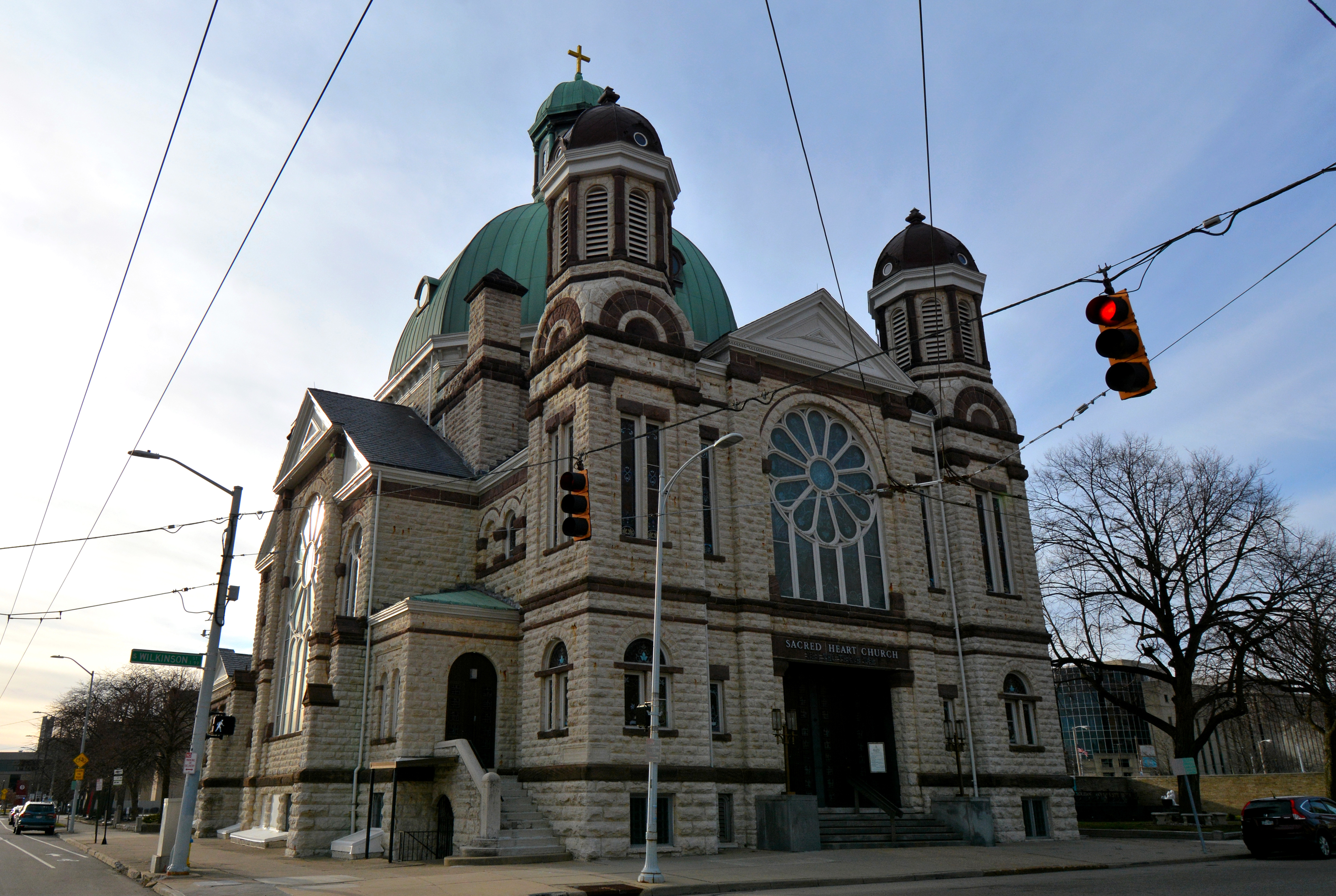
Sacred Heart Church - Dayton, Ohio


 One of Dayton's oldest Catholic parishes, St. Joseph's Church was established in 1846. The lack of space in that church prompted some of the members to leave in July 1883 and establish Sacred Heart Church under the leadership of St. Joseph's associate pastor, Hugh McDevitt, the congregation rented a meeting hall while waiting for the construction of their building. Land for the present church was purchased for $19,000, and William Henry Elder laid the cornerstone in June 1888. Exterior work was completed in the following year, and by 1893, construction was close enough to completion that the congregation could begin worshipping in their building. The building was consecrated by Bishop Maes of Covington in November 1895; construction had cost approximately $100,000. In 1902, the interior was decorated by one of Cincinnati's prominent artists, Charles Svendsen (1871-1959), who painted eleven religious oil paintings on canvas for the church. ( eight of those still remain). For many years, the parish flourished, reaching a membership of five hundred families by 1909,  but its membership had subsided by 1996. Five years later, a Vietnamese-speaking Catholic parish began using the building. Designed by Charles Insco Williams. Architectural Style-Romanesque, Queen Anne. Posted to the National Register of Historic Places on October 22, 1987. GPS: 39.75777°N, -84.19524°W.
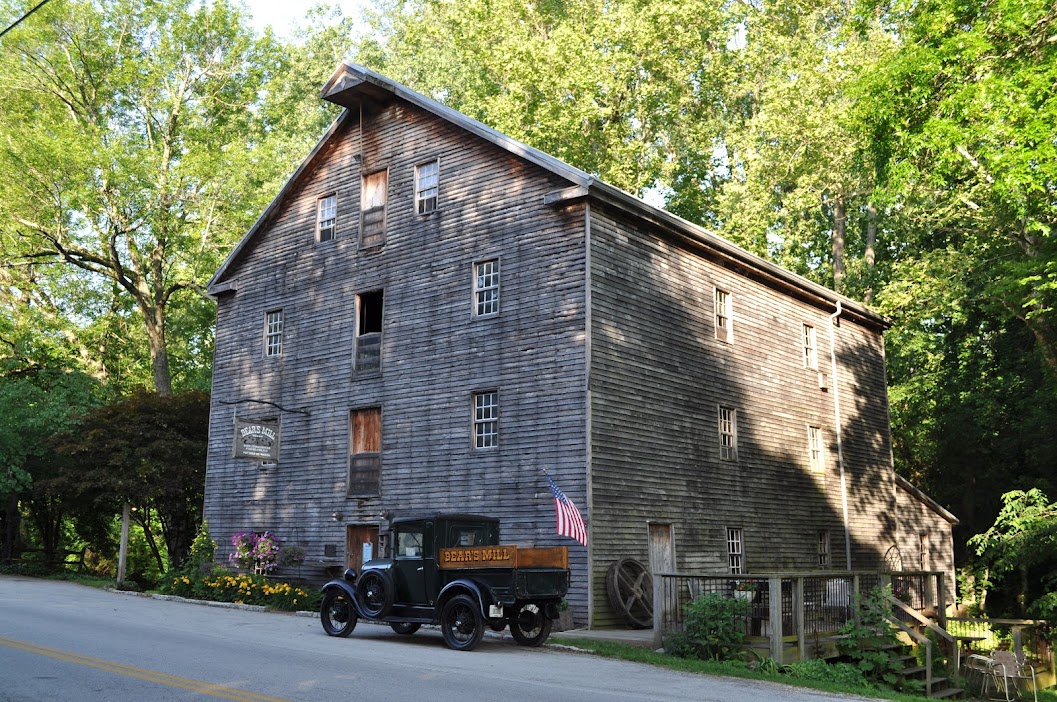
Hawthorn Hill - Oakwood, Ohio


Hawthorn Hill in Oakwood, Ohio, was the post-1914 home of Orville, Milton and Katharine Wright. Wilbur and Orville Wright intended for it to be their joint home, but Wilbur died in 1912, before the home's 1914 completion. The brothers hired the prominent Dayton architectural firm of Schenck and Williams to realize their plans. Orville and his father Milton and sister Katharine occupied the home in 1914. Distinguished visitors to the Wright family mansion in the next 38 years, included Thomas Edison, Alexander Graham Bell, Carl Sandburg, Admiral Richard Byrd, King Constantine of Greece, President Franklin D. Roosevelt, and aviation pioneer Charles Lindbergh. The NCR Corporation purchased Hawthorn Hill after Orville Wright's death in 1948 for $75,000. The home was owned by the NCR, until August 18, 2006, when the company donated the historic home to the Wright Family Foundation in honor of Orville's 135th birthday and National Aviation Day. Architectural Style-Combination of Colonial Revival with Georgian and English Renaissance style elements. Posted to the National Register of Historic Places on October 18, 1974. GPS: 39.72238°N, -84.17626°W.